Complete History of the Little League World Series: 1939–2025
The Little League World Series began as a small local tournament in Pennsylvania. Today, it is one of the world’s biggest youth baseball events. Every summer, young players travel to South Williamsport in pursuit of championship dreams.
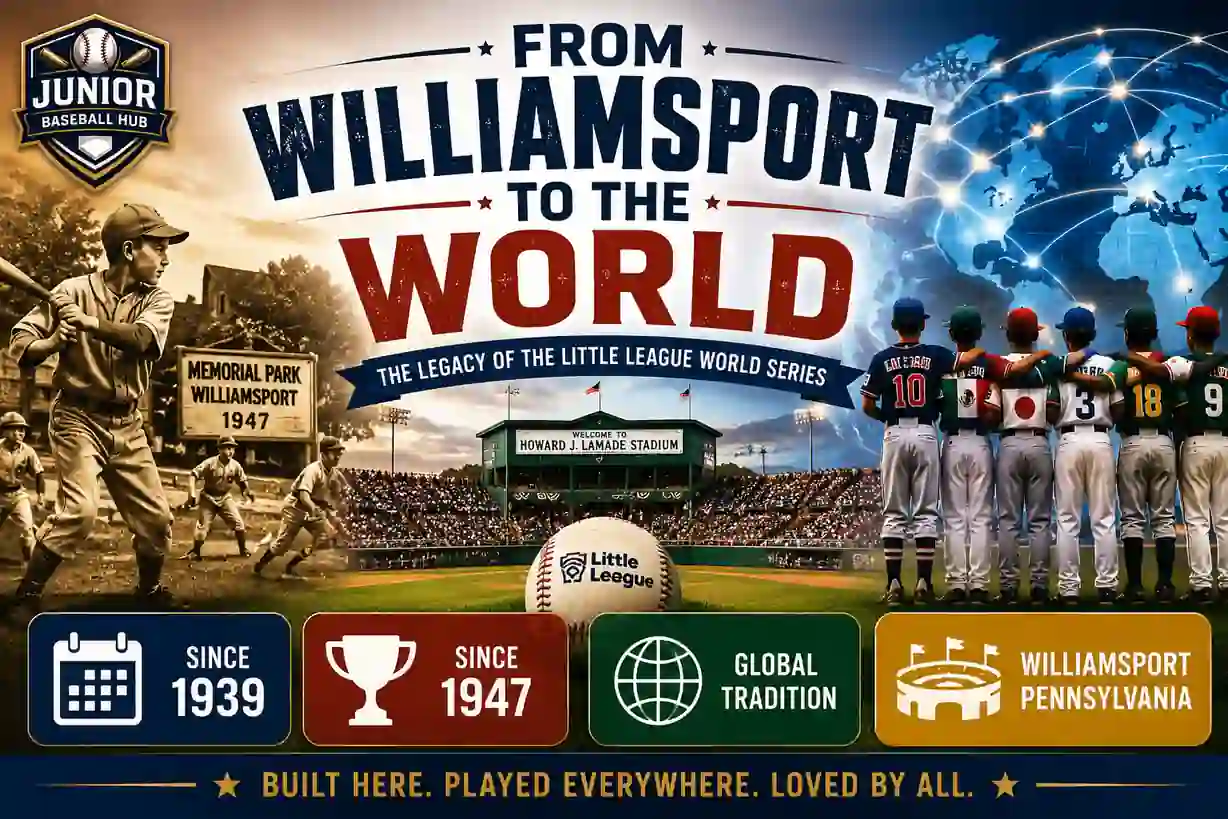
The Little League World Series started in 1947 in Pennsylvania. This youth baseball tournament quickly gained popularity in the USA. International teams later transformed the competition into a global baseball tradition. Millions of fans now follow the event through television and online broadcasts.
Over the decades, the LLWS has created unforgettable moments, legendary players, and historic rivalries. It brings together teams from around the world. It is known for close matches, emotional moments, and young talent shining under pressure. From small beginnings to the global stage, its journey continues every year.
What is the Little League World Series?
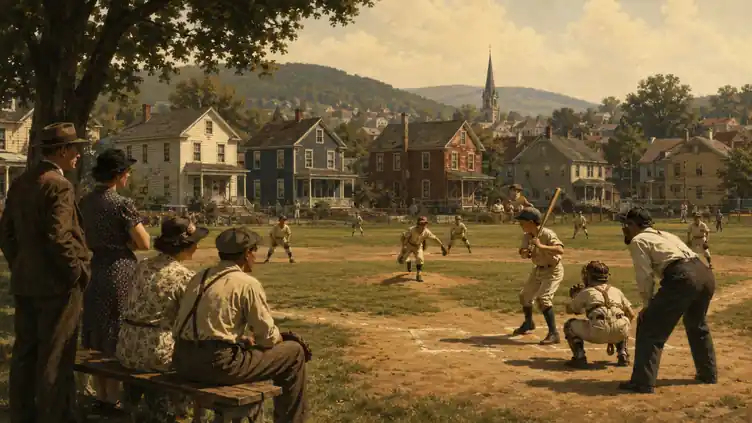
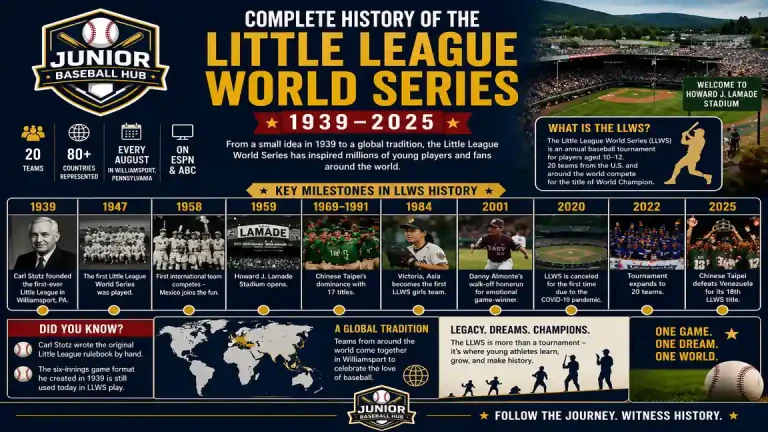
The Little League World Series (LLWS) is a youth baseball championship. It is held every August in Williamsport, Pennsylvania. Kids aged 10 to 12 compete for the title of world champion.
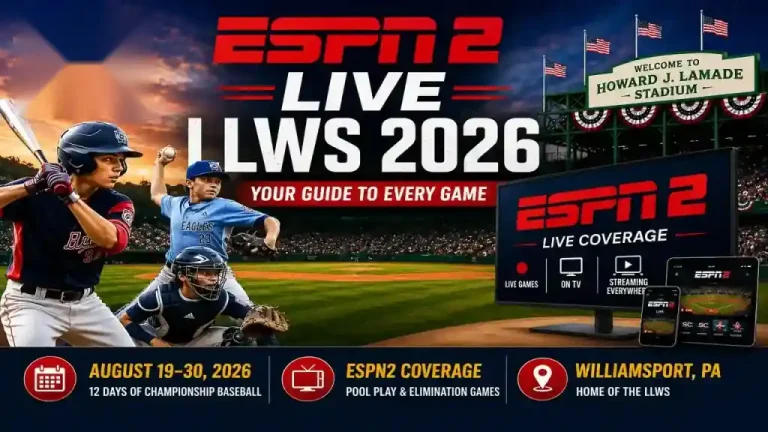
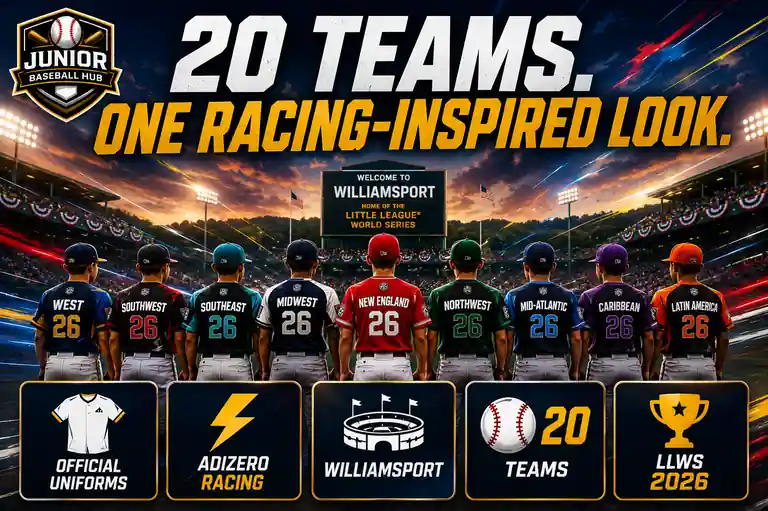
Twenty teams participate in the tournament: 10 from the USA and 10 from all over the world. Tickets for all matches are free. Anyone can attend without buying a ticket. Every game airs on ESPN or ABC.
How Carl Stotz Founded Little League in 1939
Carl Stotz was a clerk at a gas company in Williamsport, Pennsylvania. In his free time, he spent hours watching neighbourhood children play baseball on local fields. He noticed that adult baseball rules and field sizes were difficult for younger players to handle properly.
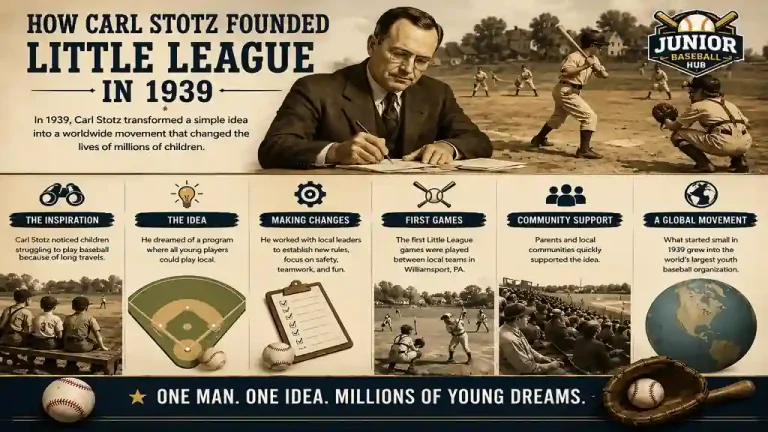
In 1939, Stotz decided to create a separate baseball program designed specifically for children. He adjusted the field dimensions, simplified certain rules, and organised teams for local kids. Many of those early ideas later evolved into the official LLWS rules and division structure still used today. His main goal was to give children a structured environment where they could enjoy baseball while learning teamwork and discipline.
The first Little League games were played between a few neighbourhood teams in Williamsport. Parents and local communities quickly became interested as the games attracted more attention. What started as a small local idea later grew into an international youth baseball organisation.
Did you know? Stotz wrote the original Little League rulebook entirely by hand. The six-inning game format he created in 1939 is still used in the LLWS today.
The First LLWS in 1947
Eight years after Little League Baseball began, Carl Stotz came up with another idea. The sport had already begun to spread across Pennsylvania and nearby states. Stotz believed it was the right time to create a championship tournament for young players.
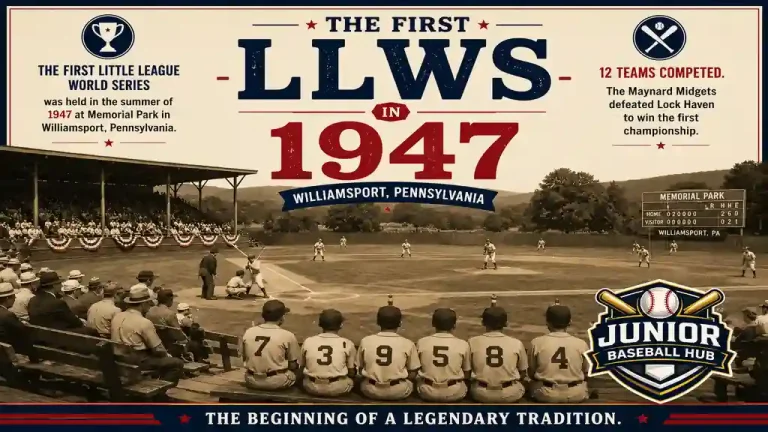
The first Little League World Series was held during the summer of 1947 at Memorial Park in Williamsport, Pennsylvania. Twelve teams participated in the competition, and most came from Pennsylvania because Little League was still new in other areas.
A local team, the Maynard Midgets, defeated Lock Haven and won the first championship. The tournament had no television coverage, major sponsors, or large crowds at the time. Families simply gathered around the field to watch children play baseball in a small community setting.
How the LLWS Became an International Tournament
By 1950, Little League Baseball had already spread across all 48 American states. Around the same time, the first programs outside the United States appeared in Canada, Panama, and Hawaii. The game also reached other countries through American military bases and slowly entered local communities.
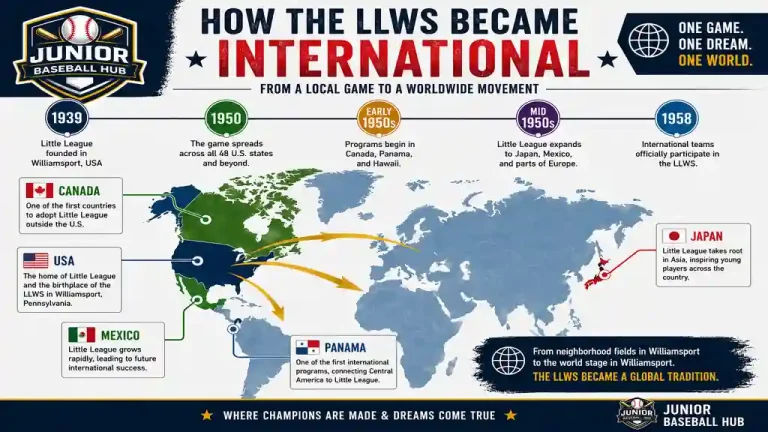
During the 1950s, Little League continued expanding into places like Japan, Mexico, and parts of Europe. Young players in different countries were now following the same rules created by Carl Stotz in 1939. As the sport grew internationally, interest in competing at Williamsport also increased.
In 1958, international teams officially participated in the Little League World Series for the first time. Many people expected American teams to control the tournament without much difficulty. Instead, a team from Monterrey, Mexico, shocked everyone by winning the championship title.
Note: The first international champion, Mexico’s Monterrey team in 1958, became the first non-U.S. team to win the LLWS. It sent a clear message – Williamsport now belonged to the world.
Key Milestones in LLWS History
Over the decades, the Little League World Series continued growing far beyond its original local roots. New countries joined the tournament, stadiums expanded, and television coverage introduced the event to larger audiences. Here are some key milestones in LLWS ‘ history:
| 1939 | Carl Stotz founded Little League Baseball in Williamsport, PA |
| 1947 | The first Little League World Series was played |
| 1950 | First international programs – Panama, Canada, Hawaii |
| 1958 | First international teams compete; Mexico wins the title |
| 1959 | Howard J. Lamade Stadium opens |
| 1969 | Start of Chinese Taipei’s dominant era (17 titles through 1996) |
| 1974 | Girls are officially allowed to play in Little League Baseball |
| 1975 | International teams are temporarily banned due to eligibility concerns |
| 1984 | Victoria Roche becomes the first girl to play in the LLWS |
| 1992 | Tournament expands to 16 teams |
| 2001 | Danny Almonte’s age controversy leads to stricter player verification rules |
| 2001 | Volunteer Stadium Opens |
| 2020 | LLWS is cancelled for the first time because of the COVID-19 pandemic |
| 2022 | Tournament expands to 20 teams (Current Format) |
| 2025 | Chinese Taipei defeats Nevada 7- 0 to win their 18th title |
Famous Moments in LLWS History
Every tournament has some great moments that define it. Here are some moments.
🏆Mexico Shocks the World (1958)
Nobody expected a Mexican team to win. Monterrey proved that international baseball was serious. It opened the door for every country that came after them.
👑The Taiwan Dynasty (1969-1991)
Chinese Taipei won 17 titles in this era. At one point, they outscored U.S. teams 120-2 across nine tournament games. No team – in any youth sport – has ever dominated a world championship like this.
🚫The International Ban (1975)
Taiwan’s dominance raised eligibility concerns. LLWS chairman Peter McGovern banned all international teams for one year. It was the most controversial decision in LLWS history. International teams returned in 1976 under tighter rules.
👧First Girl in the LLWS (1984)
Victoria Roche played for Brussels, Belgium. The first girl in tournament history. She was 12 years old. Her appearance came exactly ten years after girls were officially allowed to participate.
🧢Danny Almonte Scandal (2001)
Bronx pitcher Danny Almonte dominated the tournament and threw a perfect game. Weeks later, he was found to be 14 years old – not 12. His father had falsified his birth certificate. The team’s wins were erased. Little League introduced mandatory verified birth certificate checks immediately after.
🦠First Cancellation in 73 Years (2020)
COVID-19 forced the LLWS to cancel for the first time. The tournament had survived World War II and every crisis before it. A global pandemic finally stopped it – but only for one year.
Visit here to know the Little League World Series Past Winners – Teams & Championship Records.
LLWS Today (2026)
The Little League World Series today looks very different from that 1947 tournament. Yet the core of it remains the same. Kids are competing for the championship title.
| Info | Detail |
|---|---|
| Teams | 20 teams – 10 U.S., 10 International |
| Broadcast | ESPN, ESPN2, and ABC – every game on TV |
| Admission | Free for all spectators |
| Location | South Williamsport, Pennsylvania |
| Players | Ages 10-12 from 80+ countries |
| Tradition | Running every August since 1947 |
CONCLUSION
From a small Pennsylvania tournament, the Little League World Series grew into a worldwide baseball event. Over the decades, the competition produced unforgettable moments, legendary teams, and historic international rivalries. Today, young players from different countries continue chasing championship dreams in South Williamsport. The tournament still carries the same community spirit that inspired Carl Stotz in 1939.