
Little League World Series Rules, Age Limits, and Divisions (2026)
The Little League World Series rules, age limits, and divisions decide every team’s journey to Williamsport. One small rule can allow or exclude players from the game. These regulations shape how teams qualify, compete, and progress each summer.
In LLWS, players are typically 10 to 12 years old. Pitchers can throw up to 85 pitches per day. Games are six innings with strict safety and playing rules. Age limits, pitch counts, divisions, and eligibility rules control every step of the tournament path.
| Rule | Details |
| Player Age | 10-12 years old |
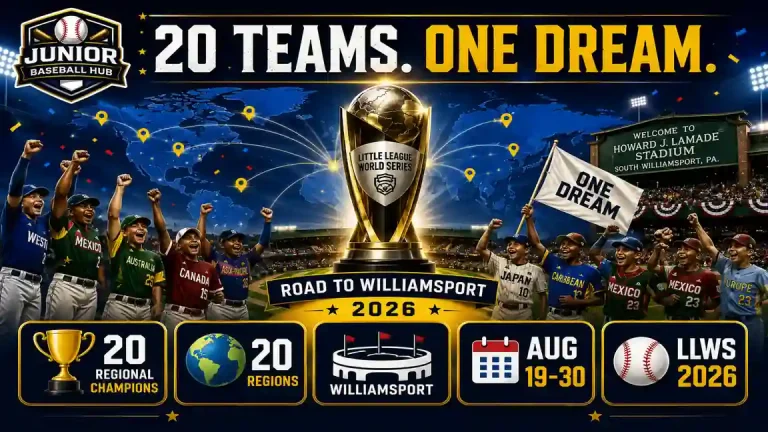
| Teams | 20 total (10 U.S. + 10 International) |
| Innings | 6 innings per game |
| Pitch Limit | 85 per day |
| Run Rule | 15-run lead after 3 innings |
| Mercy Rule | 10-run lead |
| Field Size | 225 ft outfield walls |
| Base Paths | 60 feet |
| Pitching Distance | 46 feet |
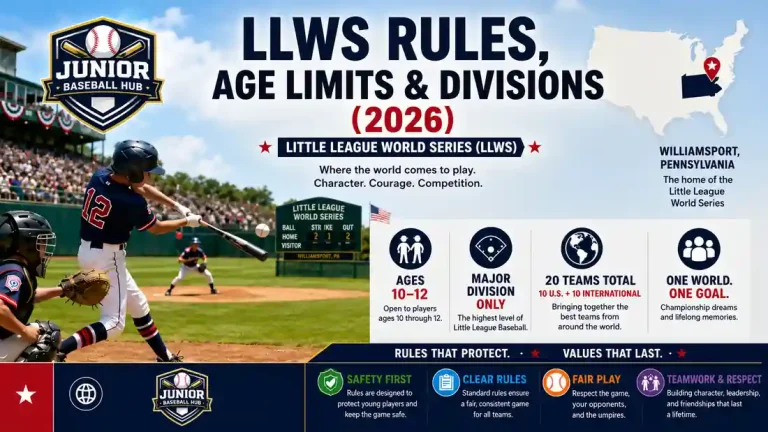
Can a 13-year-old play in the Little League World Series? How many innings does a game last? What happens if a pitcher throws too many pitches? This guide clearly explains every rule in that series. Let us start!
Who Can Play – Age Limits and Eligibility Rules
10-12-year-old kids can participate in the league. However, age is not determined solely by a birthday during the season. Little League uses an official cutoff date to determine eligibility. Before joining a local league, parents should verify their child’s official league age using the Little League Age Calculator 2026.
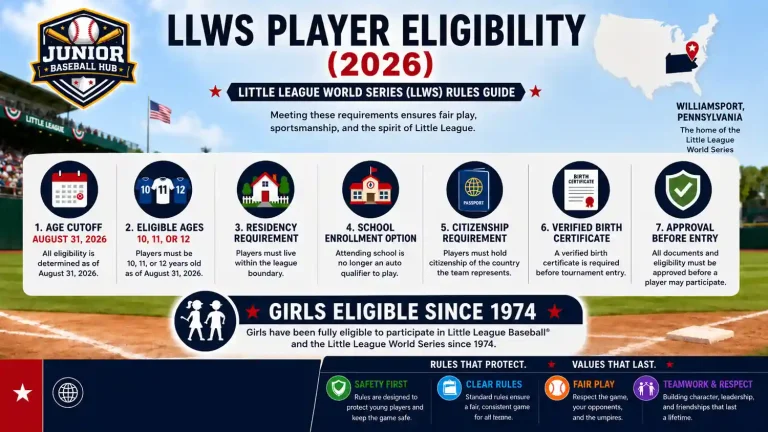
The cutoff rule was changed in 2018 because the Williamsport tournament was moved from April 30 to August 31. The new date provides families with a clearer, more consistent eligibility window each season.
Note: 2026 Age Cutoff Date: A player’s official “league age” is their age on August 31, 2026. If a child turns 13 before August 31, they are ineligible to participate in the tournament that year.
Full Eligibility Checklist
Little League Divisions – From Tee Ball to Seniors
Little League is not just one age group. It covers players from ages 4-16. Each division has its own field size, rules, and competition level.
| Division | Age Group | Field Size | LLWS? |
|---|---|---|---|
| 🥎Tee Ball | 4–7 years | 50 ft bases / 38 ft mound | – |
| ⚾Minor League | 7–11 years | 60 ft bases / 46 ft mound | – |
| 🏆Major Baseball | 9–12 years | 60 ft bases / 46 ft mound | ✓ LLWS |
| 🔥Intermediate 50/70 | 11–13 years | 70 ft bases / 50 ft mound | Own World Series |
| 💪Junior League | 12–14 years | 90 ft bases / 60.5 ft mound | Own World Series |
| 👑Senior League | 13–16 years | 90 ft bases / 60.5 ft mound | Own World Series |
Important: the famous LLWS in Williamsport is exclusively for the Major Baseball Division (ages 9–12). Players in Intermediate, Junior, and Senior divisions compete in their own separate World Series events held in different locations throughout the summer.
How the Game Is Played – Little League World Series Rules
It follows the standard major league division rulebook. The rules are similar to MLB’s in many ways.
| Rule | Detail |
|---|---|
| ⏱️Innings | 6 innings per game (not 9 like MLB) |
| 🌍Field Dimensions | 225 ft to all outfield walls at Lamade and Volunteer Stadiums |
| 🛣️Base Paths | 60 feet between bases |
| 🎯Pitching Distance | 46 feet from mound to home plate |
| 🚨Run Rule (15 runs) | Game ends if one team leads by 15+ runs after 3 innings |
| 🔟Run Rule (10 runs) | Game ends if one team leads by 10+ runs after 4 innings |
| 📋Official Game | At least 4 innings must be completed (3.5 if home team leads) |
| ✅Mandatory Play | Every player must play at least 6 consecutive defensive outs and bat once |
| ⚾Pitchers | Once removed from pitching, a player cannot return to pitch in the same game |
| 🏃Head-First Sliding | Not allowed when advancing bases – only permitted when returning to a base |
Rain Delay Rules
Weather delays are handled by the umpire-in-chief at each game. A game is considered official once 4 full innings have been completed. If rain stops a game before that point, it does not count and must be replayed.
Tie Game / Extra Innings Rules
Tied games at the end of 6 innings go to extra innings. The competition uses a tiebreaker rule to keep games moving and protect pitchers from overuse.
Uniform & Equipment Rules
Every player in the series must meet specific equipment standards. These rules exist to protect players and maintain consistency across all teams.
| Item | Requirement |
|---|---|
| 🪖Helmet | Required for all batters and runners |
| 🥅Catcher’s Gear | Helmet, mask, throat protector, chest protector, shin guards, cup – all mandatory |
| 🧤Mitt | Catchers must use a catcher’s mitt – no field gloves allowed |
| 👟Cleats | Metal cleats not allowed – rubber or plastic only |
| 👕Uniform | Must match team uniform – no alterations allowed |
Bat Rule
Coaching Rules
Coaches at the LLWS operate under strict conduct rules. Violations can lead to ejection and removal from the complex.
Did you know? A game ends early if a team leads by 10 runs after four innings.
Pitch Count Limits – By Age
Pitch count rules are strictly enforced in youth baseball tournaments. They protect young pitchers from overuse injuries.
Age 7–8
50
pitches/day
Age 9–10
75
pitches/day
Age 11–12
85
pitches/day
Age 13–16
95
pitches/day
Rest Days Rule
Here are the required rest days based on the pitches thrown.
| Pitches Thrown | Rest Days Required |
|---|---|
| 🔴66+ pitches | 4 calendar days |
| 🟠51–65 pitches | 3 days |
| 🟡36–50 pitches | 2 days |
| 🔵21–35 pitches | 1 day |
| 🟢Under 21 pitches | No rest day |
LLWS Tournament Format and Bracket Rules
The competition uses a double-elimination format split into two separate brackets. U.S. and international teams compete in their own brackets until the championship stage. You can also explore the complete list of LLWS 2026 teams and regional qualifiers participating in this year’s tournament.
| Stage | Format | Broadcast |
|---|---|---|
| 🏟️Pool Play | Double elimination within each bracket – two losses and you are out | ESPN |
| U.S. Championship Game | Last two U.S. teams face off – single elimination | ABC |
| 🌍International Championship Game | Last two international teams face off – single elimination | ABC |
| 🥉Third Place Game | The two semifinal losers play for third place | ESPN2 |
| 🏆Championship Final | U.S. champion vs International champion – always last Sunday of August | ABC |
Famous LLWS Rule Controversies
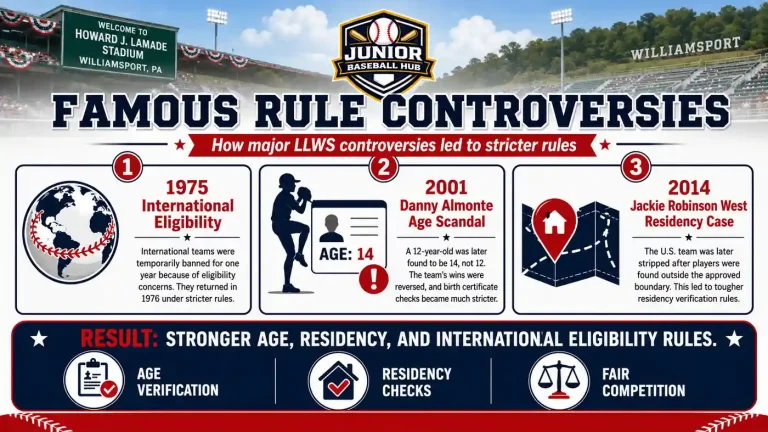
The LLWS has seen several controversies that led to important rule changes. Each case made the tournament stricter, fairer, and more transparent for all teams. To explore every champion, runner-up, and memorable tournament moment, check the complete history of the Little League World Series.
Danny Almonte Age Scandal (2001)
The Bronx pitcher Danny Almonte threw a perfect game in the 2001 tournament. He was later found to be 14, not 12. His father had submitted a false birth certificate. The team’s wins were removed from official records. After this incident, strict document verification rules were introduced for all players.
Jackie Robinson West Residency Case (2014)
Jackie Robinson West from Chicago won the 2014 U.S. championship and became national heroes. Months later, an investigation found the team had used players from outside their designated geographic boundaries. Their title was stripped in 2015, leading to stricter residency verification rules across all districts.
International Eligibility Concerns (1975)
Chinese Taipei dominated the LLWS for years, raising serious questions about player eligibility and centralized state-run training programs. In 1975, LLWS chairman Peter McGovern banned all international teams for one full year. International teams returned in 1976 under significantly stricter eligibility rules.
Why LLWS Rules Are Strict
Every major rule in the series exists because something went wrong in the past.
Conclusion
The Little League World Series rules are designed to protect players and maintain fair competition. Age limits, pitch counts, and eligibility standards help create equal conditions for every team. Understanding these rules gives fans, parents, and players a better view of how the tournament works each summer in Williamsport.